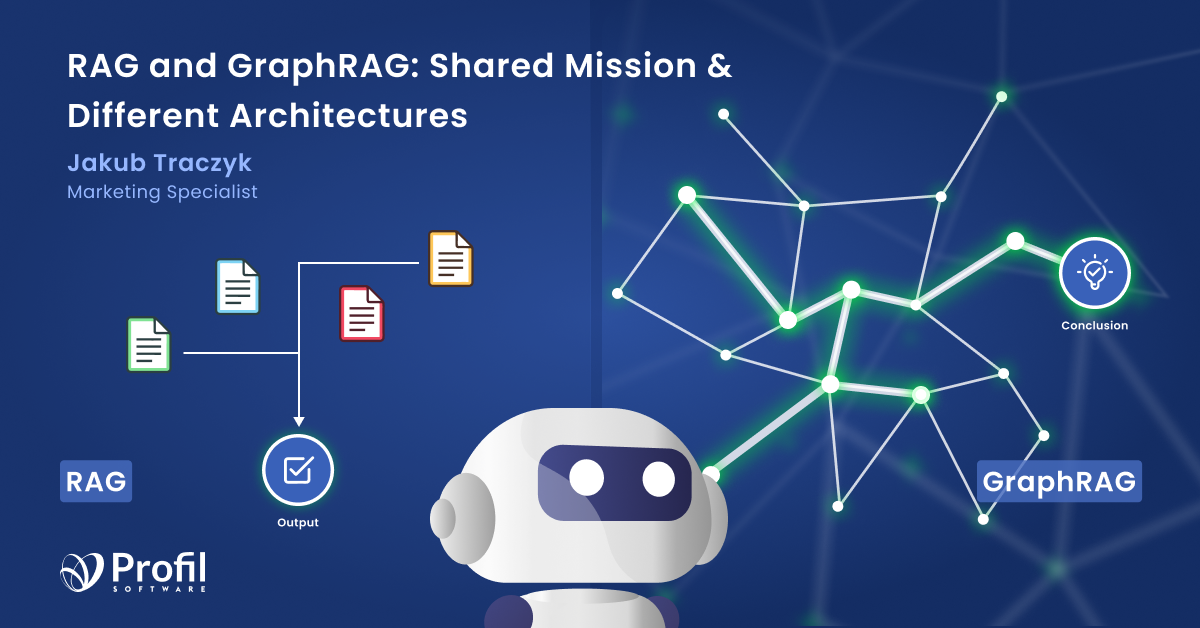
RAG und GraphRAG: Gemeinsames Ziel & unterschiedliche Architekturen

Inhaltsverzeichnis
Kurze Antwort (TL;DR)
Der Übergang von grundlegender KI zu fortgeschrittenem Schlussfolgern erfordert einen besseren Umgang mit externem Wissen. Standard-Suchwerkzeuge finden zwar relevante Inhalte, übersehen jedoch oft die tief verborgenen Zusammenhänge in großen Datensätzen. Um die Gesamtqualität der endgültigen Antwort zu verbessern, haben Sie im Allgemeinen zwei Hauptoptionen:
- Traditionelles RAG: Am besten geeignet für einfache, in sich geschlossene Fakten (wie FAQs). Es ist schnell und kostengünstig, verfügt jedoch nicht über die für komplexe Aufgaben der natürlichen Sprachverarbeitung erforderlichen Schlussfolgerungsfähigkeiten.
- GraphRAG: Nutzt eine Graphdarstellung, um Fakten miteinander zu verknüpfen. Dies ist unerlässlich für schwierige „Multi-Hop“-Fragen, bei denen die Antwort von miteinander verbundenen Informationen abhängt.
Eine ordnungsgemäße LLM-Integration mit diesen Tools ermöglicht es Ihnen, Community-Zusammenfassungen für bessere Dateneinblicke zu nutzen. Dabei handelt es sich um kurze, gemeinsam erstellte Erklärungen aus mehreren Datenquellen, die dem Modell helfen, den Kontext effektiver zu verstehen.
Nachfolgend finden Sie eine vollständige Übersicht und weitere Ressourcen, die Ihnen bei der Auswahl der besten Option helfen sollen.
Das nächste Kapitel im Bereich des KI-Schlussfolgerns
Der Schwerpunkt in der KI hat sich von der bloßen Nutzung großer Sprachmodelle hin zur Verknüpfung dieser Modelle mit zuverlässigen, unternehmensspezifischen Daten verlagert. In diesem Zusammenhang ist die Verwendung spezialisierter, branchenspezifischer oder privater Daten in RAG- und GraphRAG-Systemen unverzichtbar geworden. Diese Art von speziell aufbereiteten Datensätzen wird oft als domänenspezifische Daten bezeichnet und ist entscheidend für die Verbesserung der Genauigkeit und Relevanz von Antworten in Fachgebieten. Der Grund dafür ist, dass generische Datensätze nicht in der Lage sind, komplexe Fragen zu bearbeiten oder präzise Antworten zu liefern.
Dieser Ansatz, der als „Retrieval-Augmented Generation“ (RAG) bezeichnet wird, hat sich zum Standard entwickelt, um Halluzinationen zu reduzieren und die Genauigkeit von KI-Antworten zu gewährleisten. Hier kommt der GraphRAG-Ansatz ins Spiel, der darauf ausgelegt ist, die Komplexität zu bewältigen, mit der Standardlösungen zu kämpfen haben. Während klassisches RAG bei einfachen Suchanfragen gut funktioniert, fügt GraphRAG eine strukturelle Ebene mit einer Community-Hierarchie hinzu, die der KI hilft, Verbindungen zwischen einzelnen Informationen zu erkennen. Da diese Verknüpfungen auf klaren, strukturierten Fakten basieren, sinkt das Risiko, dass die KI Dinge erfindet, sofort.
Der Durchbruch von Microsoft im Jahr 2024
Es ist wichtig zu betonen, dass der Begriff „GraphRAG“ im Jahr 2024 von Microsoft Research offiziell eingeführt und populär gemacht wurde. In ihrer Veröffentlichung erläuterten sie, wie die Kombination von Modellen mit Wissensgraphen eine globale Zusammenfassung ermöglicht. Anhand von Community-Zusammenfassungen – also Erklärungen, die aus Gruppen verwandter Daten erstellt werden – zeigten sie, wie KI das Gesamtbild erfassen kann, anstatt nur einzelne, isolierte Fakten.
Die Entwicklung der KI: Warum RAG alles verändert
Retrieval-Augmented Generation ist ein moderner Ansatz, der große Sprachmodelle (LLMs) verbessert, indem er sie mit externen Datenquellen verbindet. Anstatt sich auf ihr festes Wissen zu verlassen, beziehen RAG-Systeme bei jeder gestellten Frage relevante Informationen aus aktuellen Datenbanken, Dokumentenarchiven oder anderen Wissensspeichern.
Diese Systeme nutzen die semantische Suche, um Texte zu finden, deren Bedeutung eng mit der Anfrage des Nutzers zusammenhängt. Diese Integration ermöglicht es LLMs, Antworten zu generieren, die nicht nur genauer sind, sondern auch auf den neuesten und relevantesten Informationen basieren. Deshalb hat sich RAG in vielen Branchen zu einer beliebten Wahl für Frage-Antwort-Systeme, Zusammenfassungen und intelligente Chatbots entwickelt.
Erfahren Sie, wie Sie mit LangGraph KI-Agenten entwickeln können.
Gemeinsames Ziel: LLMs mit zuverlässigem Kontext versorgen
Trotz ihrer technischen Unterschiede verfolgen RAG und GraphRAG dasselbe Hauptziel: LLMs mit sachlichen und zuverlässigen Ergebnissen zu versorgen. Dadurch wird sichergestellt, dass das Modell mithilfe klarer und präziser Informationen eine relevante Antwort generieren kann, die genau der Absicht des Nutzers entspricht.
LLMs sind keine Datenbanken, sondern Schlussfolgerungsmaschinen mit einer Wissensgrenze, was bedeutet, dass ihre Informationen an einem bestimmten Zeitpunkt enden. Um zu verhindern, dass sie sich Dinge ausdenken, beziehen beide Techniken relevante Fakten aus Ihren privaten Dokumenten und externen Quellen und stellen so sicher, dass die Informationen der realen Welt entsprechen. GraphRAG geht noch einen Schritt weiter, indem es umfassendere Hintergrundinformationen einbezieht, was dem Modell hilft, präzisere und vertrauenswürdigere Antworten zu liefern.
Zu den allgemeinen Merkmalen gehören:
Traditionelles RAG: Bewährte Stärken und klare Grenzen
Das traditionelle RAG basiert auf der Vektorsuche. Dabei werden Ihre Dokumente in Textabschnitte, beispielsweise kurze Absätze, zerlegt und in eine Reihe von Zahlen umgewandelt, die deren Kernaussage wiedergeben. Wenn Sie eine Frage stellen, verfährt das System genauso: Es wandelt Ihre Anfrage in Zahlen um, um die Textstellen zu finden, die am besten dazu passen. Anstatt nur nach Schlüsselwörtern zu suchen, findet es die Informationen, die tatsächlich dieselbe Bedeutung haben wie Ihre Frage.
Dieser Ansatz funktioniert gut bei einfachen Nutzerfragen wie „Wie lauten unsere Urlaubsregelungen?“ oder „Wie sind die Arbeitszeiten?“, bei denen das System lediglich den richtigen Absatz finden und die Antwort zurückgeben muss. Alles funktioniert fast perfekt, bis die Fragen komplexer werden.
Dafür gibt es drei Hauptgründe:
Wissensgraph: Das fehlende Glied im Verständnis von RAG
Ein Wissensgraph ist eine Methode zur Organisation von Informationen, die zeigt, wie verschiedene Dinge – wie Personen, Unternehmen oder Produkte – miteinander verbunden sind. Die Daten werden als Knoten und Verbindungen zwischen ihnen gespeichert, wodurch die Beziehungen leicht erkennbar sind. Ein solcher Graph kann in einer Graphdatenbank wie Neo4j gespeichert werden, was die Verwaltung und das Auffinden der Daten erleichtert.
In einem RAG-System arbeitet ein Wissensgraph mit großen Sprachmodellen zusammen, um Suchvorgänge intelligenter zu gestalten, einen besseren Kontext zu bieten und zu zeigen, wie verschiedene Datenelemente miteinander in Beziehung stehen. Diese Kombination geht über die Möglichkeiten vektorbasierter Systeme hinaus und erleichtert es, echte Zusammenhänge zu erkunden und tiefere Einblicke zu gewinnen.
Warum GraphRAG komplexe Probleme mit strukturierten und unstrukturierten Daten löst
GraphRAG ermöglicht präzisere Antworten, indem es die Stärken von LLMs mit der Struktur von Wissensgraphen kombiniert. Es stellt wichtige Konzepte oder Entitäten als Knoten dar und verbindet diese durch klare und direkte Beziehungen. Diese Methode bewahrt die ursprüngliche Bedeutung und den Kontext, anstatt Informationen in kleine, unzusammenhängende Teile zu zerlegen.
Dadurch kann das System nachvollziehen, wie verschiedene Teile der Informationen zusammenpassen, und präzisere sowie intelligentere Antworten liefern, indem es sich beim Abrufprozess auf relevante Entitäten konzentriert. GraphRAG ermöglicht zudem die Kombination strukturierter Daten aus Wissensgraphen mit unstrukturierten Daten aus Eingabedokumenten, wodurch die Tiefe und Qualität der Datensuche verbessert wird.
Einige Vorteile dieses Ansatzes:
- Überwindung der Multi-Hop-Barriere: Durch die Überwindung der Multi-Hop-Barriere mittels Verknüpfung verwandter Informationen kann das System Zusammenhänge zwischen Fakten erkennen und komplexe Fragen genauer verstehen.
- Erfassung tiefer Zusammenhänge: Erreicht eine Genauigkeit von etwa 87 %, indem logische Verbindungen zwischen relevanten Knoten und verwandten Konzepten verfolgt werden.
- Reduzierung von Fehlinterpretationen: Durch die Analyse mehrerer Informationselemente und die Identifizierung von Verbindungen zwischen Daten trägt GraphRAG dazu bei, die Anzahl falscher Antworten zu verringern.
Gibt es bei dieser Methode denn wirklich keine Nachteile?
Leistungs- und Kostenvergleich
Im Vergleich zur herkömmlichen RAG-Methode schneidet GraphRAG bei Aufgaben, die das Verstehen von Zusammenhängen und komplexes logisches Denken erfordern, deutlich besser ab. Es erzielt eine wesentlich höhere Genauigkeit, insbesondere bei der Analyse von Beziehungen zwischen einzelnen Informationen oder bei der Bearbeitung mehrstufiger Fragen. Doch obwohl GraphRAG fortschrittlicher und präziser ist, weist es auch einige Nachteile auf. Wer den Einsatz plant, sollte bedenken, dass die Generierung von Antworten mehr Zeit in Anspruch nimmt und aufgrund des Wissensextraktionsprozesses höhere Kosten verursacht; daher sollten Nutzer hinsichtlich potenzieller Ausgaben und Verluste vorsichtig sein.
Beispiele aus der Praxis: GraphRAG im Einsatz
Die Betrugserkennung ist ein hervorragendes Beispiel dafür, wie GraphRAG uns helfen kann, große, komplexe Datensätze besser zu verstehen. In diesem Bereich ist es wichtig, klare Verbindungen zwischen Transaktionen, Konten und Personen herzustellen, denn nur so lassen sich verdächtige Muster erkennen, die sonst leicht übersehen würden. Durch die Umwandlung von Finanzdaten in einen Wissensgraphen kann GraphRAG verborgene Zusammenhänge aufdecken, die auf Betrug hindeuten könnten. Der Graph kann Konten, Transaktionen und Personen miteinander verknüpfen und so dabei helfen, ungewöhnliches Verhalten aufzudecken.
Diese Methode macht die Betrugserkennung nicht nur genauer, sondern liefert auch klare und leicht verständliche Ergebnisse, die direkt mit den zugrunde liegenden Daten verknüpft sind. GraphRAG hilft Unternehmen dabei, verdächtige Aktivitäten schneller und effektiver zu erkennen und zu unterbinden – selbst wenn die Daten umfangreich, komplex und ständig im Wandel begriffen sind.
Implementierung von GraphRAG: Wichtige Schritte und Überlegungen
Die Erstellung eines effektiven GraphRAG-Systems erfordert einige klare Schritte, um sicherzustellen, dass es komplexe Fragen bearbeiten und aussagekräftige Ergebnisse liefern kann. Der Prozess beginnt mit dem Aufbau eines für Ihren Fachbereich geeigneten Wissensgraphen, indem Sie Schlüsselkonzepte, deren Verbindungen und wesentliche Details definieren. Als Nächstes wählen Sie eine Datenbank aus, die große Informationsmengen effizient speichert und bei Bedarf einen schnellen Zugriff ermöglicht. Sie sollte sich zudem nahtlos mit anderen Datenquellen verknüpfen lassen, um die Wissensbasis aktuell und korrekt zu halten.
Schließlich ist es wichtig, Ihr System zu überprüfen und zu verbessern. Das bedeutet, zu kontrollieren, ob die Antworten korrekt und sinnvoll sind, die Verbindung zwischen dem Sprachmodell und der Datenbank zu optimieren und den Wissensgraphen zu aktualisieren, sobald neue Informationen vorliegen. Indem Sie diese Schritte befolgen und die spezifischen Anforderungen Ihres Anwendungsfalls berücksichtigen, können Sie ein GraphRAG-System implementieren, das selbst auf die anspruchsvollsten Anfragen zuverlässige und qualitativ hochwertige Antworten liefert.
Was ist die beste Option für Sie?
Bei der Entscheidung zwischen Traditional RAG und GraphRAG für Ihr KI-Projekt ist es entscheidend, Ihre spezifischen Datenmerkmale, Leistungsanforderungen und geschäftlichen Prioritäten zu bewerten. Jeder Ansatz hat unterschiedliche Stärken, wodurch er sich besser für verschiedene Szenarien eignet.
Im Folgenden geben wir Ihnen klare Leitlinien an die Hand, die Ihnen dabei helfen sollen, die für Ihren Anwendungsfall am besten geeignete Architektur zu ermitteln, damit Sie das richtige Tool auswählen, um präzise, effiziente und zuverlässige KI-gestützte Antworten zu liefern.
Die richtige Balance zwischen Geschwindigkeit, Kosten und Tiefe zu finden, ist der Schlüssel zu einer erfolgreichen KI-Implementierung.
Suggested blog posts
Find something interesting to read about
maschinelles Lernen