Der Wandel von fest programmierten RAGs zu intelligenten agentenbasierten Workflows

Inhaltsverzeichnis
Kurze Antwort (TL;DR)
Die Technologie entwickelt sich rasant weiter, und einfache Chatbots reichen für moderne Unternehmen, die digitale Partner benötigen, nicht mehr aus. Einfache Tools können zwar Informationen finden, haben aber Schwierigkeiten mit komplexen Problemen. Deshalb ist es so wichtig, die für Sie passende Lösung zu wählen.
- Standard-RAG: eignet sich gut für eindeutige Sachverhalte, ist schnell und kostengünstig.
- Agentenbasierte Workflows: ein intelligenterer Ansatz, bei dem in einem kontinuierlichen Zyklus mehrere Aufgaben geplant und erledigt werden.
Wenn Sie erfahren möchten, wie Sie mit Ihrer eigenen Lösung beginnen können, lesen Sie den Abschnitt „Discovery Workshop“ weiter unten.
Von einfachen Bots zu intelligenten Partnern
Die künstliche Intelligenz entwickelt sich rasant weiter, und daher versuchen alle Unternehmen, durch ständige Anpassungen Schritt zu halten. Im Jahr 2024 waren die meisten Unternehmen begeistert von der Einführung von Chatbots, die einfache Fragen beantworten, grundlegende Interaktionen automatisieren und sich wiederholende Aufgaben wie regelbasierte Prozesse übernehmen konnten. Für viele von ihnen war dies ein erster Schritt hin zum Einsatz von KI zur Verbesserung der Effizienz und des Kundenerlebnisses. Diesen frühen Lösungen fehlte es an der Flexibilität und den fortschrittlichen Datenverarbeitungsfähigkeiten, die für die Anpassung an komplexere Anforderungen erforderlich waren.
Anfang 2025 begann sich der Fokus zu verlagern, da Unternehmen nach und nach dazu übergingen, KI-Lösungen in ihren Teams zu implementieren. In enger Zusammenarbeit mit den Mitarbeitern tragen diese Systeme dazu bei, intelligente, flexible und kreativere Lösungen als je zuvor zu entwickeln.
Warum einfache RAG-Systeme den Anschluss verlieren
Wenn Sie Ihre KI noch immer mit fest programmierten oder statischen RAG-Systemen entwickeln, hinkt Ihr Tool möglicherweise bereits hinterher.
Unternehmen müssen heute über einfache Pipelines hinausgehen und in anspruchsvolleren Situationen agentenbasierte Workflows einsetzen. Dabei handelt es sich um KI-basierte Systeme, in denen autonome Agenten Entscheidungen treffen, Aufgaben ausführen und mit minimalem menschlichem Eingriff arbeiten können. Im Gegensatz zur herkömmlichen Automatisierung sind sie nicht an feste Regeln gebunden und können sich sofort an veränderte Anforderungen anpassen.
Hier sind drei Hauptprobleme traditioneller RAG-Systeme, die sie in sich verändernden Umgebungen weniger nützlich machen.
- Problem der einmaligen Suche: Das System hat nur einen Versuch, die richtigen Daten zu finden. Wenn also die erste Suche fehlschlägt, ist das Endergebnis wahrscheinlich ungenau.
- Falsche Antworten ohne Vorwarnung: RAG-Systeme geben Ihnen möglicherweise eine Information, ohne darauf hinzuweisen, dass sie sich nicht sicher sind.
- Kein mehrstufiges Denken: Einfache KI scheitert bei komplizierten Aufgaben, weil sie nicht vorausschauend planen kann.
Heißt das, dass komplexe Probleme unlösbar sind? Keineswegs, und die Lösung ist einfacher, als Sie gedacht hätten.
Die Lösung: Agente-basierte Workflows für KI-Agenten
Dieser Ansatz bietet ein hohes Maß an Autonomie und Effizienz. Er versteht die bereitgestellten Informationen, nutzt spezialisierte Tools zur Erledigung von Aufgaben, überprüft die Ergebnisse und trägt dazu bei, Fehler zu minimieren.
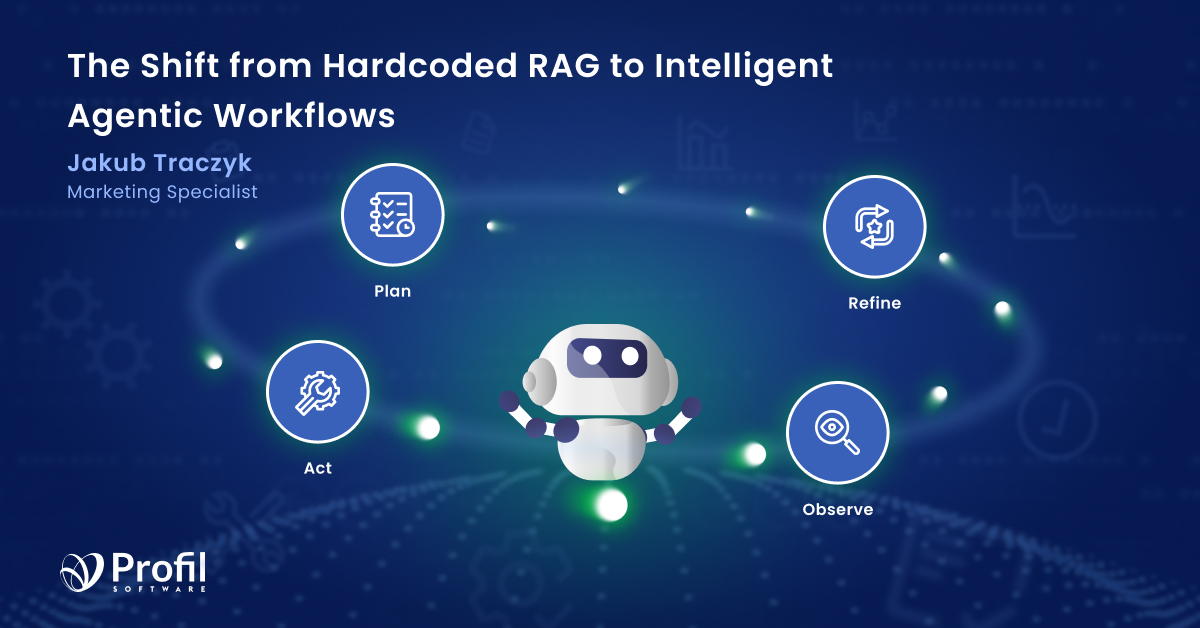
Anstatt einem geradlinigen und starren Ablauf zu folgen, arbeitet ein agente-basierter Workflow in einer kontinuierlichen Schleife, um optimale Ergebnisse zu gewährleisten. Diese intelligente Schleife ermöglicht es dem System, in vier spezifischen Phasen zu denken und zu handeln:
- Plan: KI unterteilt große Ziele in kleine Schritte und erkennt potenzielle Probleme frühzeitig, um die besten Ergebnisse zu erzielen.
- Vorgehen: Mit intelligenten Tools Aufgaben automatisieren und Probleme mit minimalem Aufwand lösen.
- Beobachten: Fakten überprüfen, Daten sammeln und Muster erkennen, um Arbeitsabläufe zu optimieren.
- Verfeinern: Aus neuen Informationen lernen und um Hilfe bitten, damit alles im Plan bleibt.
In Multi-Agenten-Systemen arbeiten mehrere KI-Helfer gemeinsam an einer einzigen Aufgabe.
So kann beispielsweise ein Agent Code schreiben, während ein anderer diesen auf Fehler überprüft, und beide können während des Prozesses eigene Entscheidungen treffen und ihre Pläne anpassen.
Technische Aspekte agentischer Workflows
Agentische Workflows basieren auf mehreren Hauptkomponenten, die zusammenwirken, um eine intelligente und flexible Automatisierung zu schaffen. Im Zentrum dieser Workflows stehen KI-Agenten, autonome digitale Mitarbeiter, die Entscheidungen treffen, Aufgaben ausführen und komplexe Prozesse mit minimalem menschlichem Eingriff verwalten können.
Sie stützen sich auf große Sprachmodelle (Large Language Models, LLMs), um fortgeschrittenes logisches Denken, das Verstehen natürlicher Sprache und die Problemlösung in einer Vielzahl von Anwendungsfällen zu unterstützen. Die Verarbeitung natürlicher Sprache (Natural Language Processing, NLP) ist dabei von grundlegender Bedeutung, da sie es LLMs ermöglicht, menschliche Sprache zu verstehen und zu generieren, was eine effektive Kommunikation und Entscheidungsfindung erleichtert.
Generative KI erweitert diese Fähigkeiten noch weiter, indem sie es Systemen ermöglicht, neue Lösungen zu entwickeln und sich dynamisch anzupassen, sobald neue Informationen verfügbar werden. APIs spielen ebenfalls eine wesentliche Rolle, indem sie KI-Agenten mit Unternehmenssystemen, Datenbanken und externen Datenquellen verbinden, was einen nahtlosen Informationsfluss und eine durchgängige Prozessautomatisierung ermöglicht. Die Echtzeit-Datenverarbeitung ist in diesem Zusammenhang wichtig, da sie es KI-Agenten ermöglicht, adaptive Entscheidungen auf der Grundlage der aktuellsten Informationen zu treffen, wie beispielsweise die sofortige Anpassung von Preisen oder die Reaktion auf Marktveränderungen.
Trotz dieses hohen Maßes an Autonomie bleibt die menschliche Aufsicht unerlässlich, um die Übereinstimmung mit den Unternehmenszielen, ethischen Grundsätzen und gesetzlichen Anforderungen sicherzustellen. Gemeinsam ermöglichen KI-Agenten, LLMs, generative KI, Integrationen und menschliche Aufsicht die Automatisierung komplexer Arbeitsabläufe, die Verbesserung der betrieblichen Effizienz und eine fundiertere Entscheidungsfindung.
Anwendungsfälle für agentenbasierte Workflows
Der Einsatz agentenbasierter Workflows breitet sich in vielen Branchen und Geschäftsbereichen aus. Gartner prognostiziert, dass bis Ende 2026 40 % der Unternehmensanwendungen aufgabenspezifische KI-Agenten enthalten werden, was ihre zunehmende Bedeutung in Unternehmensabläufen verdeutlicht.
Im Finanz- und Betriebsbereich nutzen Unternehmen wie JPMorgan Chase maschinelles Lernen, um große Transaktionsmengen zu analysieren und Anomalien zu erkennen, die auf Betrug hindeuten könnten. Anstatt sich auf autonome KI-Agenten zu verlassen, lassen sich diese Systeme besser als datengesteuerte Modelle verstehen, die die Betrugserkennung und das Risikomanagement unterstützen. KI kann Unternehmen auch bei der Einhaltung von Vorschriften helfen, indem sie komplexe Regelungen analysiert und die Anpassung interner Prozesse an sich ändernde Anforderungen unterstützt.
SAP nutzt KI-Agenten zudem, um Probleme mit Rechnungen zu bearbeiten, fehlende Zahlungen aufzuspüren und Fehler in Datensätzen zu beheben, wodurch Finanzaufgaben schneller und einfacher werden. Im Lieferkettenmanagement nutzen diese Tools Echtzeitdaten, um Sendungen zu verfolgen, die Nachfrage zu prognostizieren und Bestände automatisch nachzubestellen, was Unternehmen dabei hilft, reibungslos zu arbeiten und Kosten zu kontrollieren.
Die Auswahl Ihrer KI-Tools
Die Wahl des richtigen Tools hängt davon ab, was Ihnen am wichtigsten ist. Möchten Sie strenge Regeln befolgen, soll sich das Tool wie ein echter Mensch verhalten oder auf natürliche Weise kommunizieren?
Welches Tool am besten geeignet ist, hängt wirklich davon ab, wie Ihr Arbeitsablauf in der Praxis aussieht.
Wenn Ihr Prozess linear verläuft und auf klaren Rollen basiert, ist CrewAI oft der schnellste Weg, um einen funktionierenden Prototyp zu erstellen, der wie ein echtes Team arbeitet. Für Aufgaben, die eher zyklisch sind und hohe Zuverlässigkeit sowie eine genaue Fortschrittsverfolgung erfordern, ist LangGraph eine solide Wahl für stabile Produktionsumgebungen. Wenn Ihre Agenten miteinander sprechen, diskutieren oder den Code durch wiederholte Iterationen verbessern müssen, bietet Ihnen AutoGen die größte Flexibilität.
Die frühzeitige Wahl der richtigen Architektur kann Sie vor ernsthaften Leistungsproblemen bewahren, wenn Ihr System skaliert wird.
Herausforderungen bei agentenbasierten Workflows
Agentenbasierte Workflows bieten viele Vorteile und Möglichkeiten, bringen jedoch auch eine erhebliche Verantwortung mit sich. Jeder Investor sollte sich der Herausforderungen bewusst sein, die mit der Implementierung und Skalierung solcher Lösungen verbunden sind.
Eine der größten Herausforderungen sind Sicherheit und Datenschutz, da agentische Workflows oft auf sensible Daten zurückgreifen und mit vielen internen und externen Systemen verbunden sind, was das Risiko naturgemäß erhöht. Deshalb ist es so wichtig, die Schlussfolgerungsebene zu schützen, auf der KI-Agenten eigenständig Entscheidungen treffen. Ohne angemessene Sicherheitsvorkehrungen können Probleme wie Tool Poisoning, Memory Poisoning und agentische Schleifen zu kostspieligen Fehlern, Sicherheitsproblemen und Datenverlusten führen.
Eine weitere große Herausforderung ist die Anbindung agentischer Workflows an ältere Systeme. Viele Unternehmen setzen nach wie vor auf Technologien, die nicht reibungslos mit neuer KI-Automatisierung zusammenarbeiten. Infolgedessen müssen Experten zusätzliche Zeit aufwenden, um sicherzustellen, dass alles problemlos zusammenläuft.
Auch wenn KI-Agenten selbstständig arbeiten, müssen Menschen weiterhin einbezogen werden, insbesondere bei der Bewältigung unerwarteter Probleme, beim Treffen ethischer Entscheidungen und bei der Einhaltung von Regeln und Vorschriften. Gute „Human-in-the-Loop“-Systeme und eine sorgfältige Überwachung sind sehr wichtig, um Arbeitsabläufe sicher, zuverlässig und auf die Unternehmensziele abgestimmt zu halten.
Indem sie diese Probleme angehen, können Investoren das Beste aus agentischen Arbeitsabläufen herausholen und dabei vollkommen sicher bleiben.
Der geschäftliche Nutzen: Operative Effizienz und ihre Bedeutung für den ROI
Bei der Einführung agentischer Systeme geht es um weit mehr als nur darum, einem Technologietrend zu folgen. Es handelt sich um eine echte Investition, die darauf abzielt, die Abläufe in unserem gesamten Unternehmen zu optimieren und gleichzeitig die anspruchsvollsten Aufgaben für unser Team zu bewältigen.
Kontinuierliche Verbesserung und Lernen in agentenbasierten Arbeitsabläufen
Einer der größten Vorteile dieser KI-Systeme besteht darin, dass sie nie aufhören zu lernen. Sie werten die Ergebnisse ihrer Arbeit aus und nutzen Rückmeldungen von Menschen, um ihre Vorgehensweise zu verbessern. Dieser fortlaufende Prozess hilft den Tools, sich anzupassen und relevant zu bleiben, während sich die Welt um sie herum verändert. Durch die ständige Verfeinerung ihrer Handlungen stellen diese Arbeitsabläufe sicher, dass sie stets einen Mehrwert bieten, selbst wenn sich die Anforderungen Ihres Unternehmens verändern.
Modelle des maschinellen Lernens sind der Hauptbestandteil dieses Wachstums, da sie es den Systemen ermöglichen, aus neuen Informationen zu lernen und jeden Tag bessere Entscheidungen zu treffen. Durch den Einsatz von Prompt Engineering können Teams KI-Modelle so lenken, dass sie sich auf die spezifischen Aufgaben konzentrieren, die für ihr Unternehmen am wichtigsten sind. Dieser Prozess macht die Tools viel präziser und nützlicher für die tatsächliche Arbeit, die Menschen erledigen müssen. Diese Modelle fungieren als Partner, die jedem helfen, seine Ziele mit mehr Selbstvertrauen und Schnelligkeit zu erreichen.
Ihr Weg zum Erfolg: Beginnen Sie mit Discovery-Workshops
Der ideale Ausgangspunkt für Ihre KI-Transformation ist ein Discovery-Workshop. Diese Sitzungen schaffen eine solide Grundlage für die Integration von KI in Ihr Unternehmen und sorgen für eine einheitliche Ausrichtung aller wichtigen Entscheidungsträger.
In unserer fokussierten Sitzung führen wir Sie durch eine klare Agenda, die alle wichtigen Aspekte Ihres Produktentwicklungszyklus abdeckt:
Am Ende des Workshops erhalten Sie drei wichtige Ergebnisse:
- Produkt-Vision-Board
- Informationsarchitektur
- Priorisierte Liste der funktionalen Anforderungen
Diese Dokumente bilden das Rückgrat jeder Entscheidung während Ihres gesamten Produktentwicklungsprozesses. Sie ermöglichen es Ihren KI-Agenten, in dynamischen Umgebungen effektiv zu arbeiten, und helfen Ihnen dabei, Prozesse sicher zu automatisieren, um Ihre Ziele zu erreichen.
Wenn Sie mit unseren Discovery-Workshops beginnen, stellen Sie sicher, dass Sie intelligente Arbeitsabläufe entwickeln, die auf Ihre Geschäftsziele zugeschnitten sind, kontinuierlich lernen können und so ausgelegt sind, dass sie mit minimalem menschlichem Eingriff autonom funktionieren. Melden Sie sich noch heute an, um damit zu beginnen, Ihre Altsysteme in agile, KI-gesteuerte Systeme umzuwandeln, die Ihre Abläufe optimieren und Ihre strategischen Ziele erreichen.
Nehmen Sie Kontakt mit uns auf und lassen Sie uns gemeinsam Ihre KI-Strategie entwickeln: https://profil-software.com/ai-discovery-workshops/
Suggested blog posts
Find something interesting to read about
maschinelles Lernen